21
AI &AUTOMATION BAROMETER REPORT
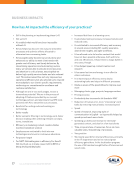
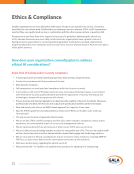
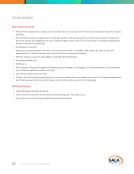
How does your organization currently/plan to address
ethical AI considerations?
Some form of training and/or security compliance
• A training has been provided regarding proprietary data sharing, and gender bias
• Conduct in accordance with the provisions of the law
• Data Security Company
• Full transparency on tools used and compliance with client’s security needs
• In accordance with current EU data protection laws, reviewing contractual clauses, in accordance
with information security quality standards and with the application of security techniques and
technologies, always with transparency with clients.
• Privacy policies and internal regulations to determine the usability criteria of AI outputs. Moreover,
professionals who deal with AI tools and outputs are specifically trained to perform the tasks.
• Slow and steady with a focus on NEED-based approval for a specific AI use case.
• Specific AI Ethic guidelines already published, influences AI Ethics on broader scale (national,
international)
• The way we use AI does not generate ethical issues.
• We are an ISO 27001 certified company and the risks, either related to compliance, ethics and/or
operations, are contemplated as part of our security management policies.
• We are cautious about AT use and only use it when we are 100% sure we can do so.
• We are in the process of putting together a policy for responsible use of AI. This is to be used by staff
on their day to day work as well as implementation teams that engage with technology partners.
• We are very aware of ethical considerations and are involved in many initiatives, including SAFE-AI
Tak Force, to learn more, help drive the conversation and come up with solutions.
• We have a written policy regarding the ethical use of AI
• We launched Safe -AI Taskforce to establish best practices for adopting AI in interpreting.
Ethics &Compliance
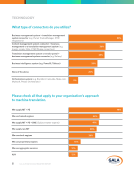
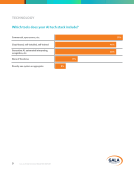
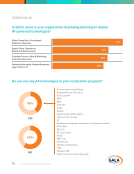
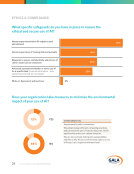
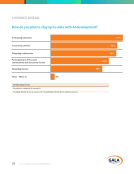
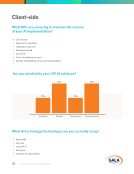
Smaller organizations are more likely than other types of orgs to use a public free service. Clients are
most likely to use a home-bred AI followed by an enterprise service, whereas 100% of LSP respondents
selected they use a public paid service in combination with the other answer options in question #33.
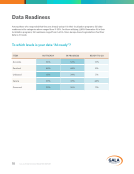
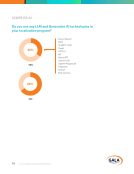
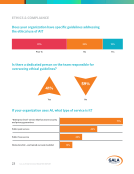
Europeans are less likely than other regions to have specific guidelines addressing the ethical use
of AI, whereas Americans are more likely. South American organizations have a greater chance of
having someone responsible for overseeing ethical guidelines. South America-based organizations
proportionally utilize more enterprise level services (more secure), whereas those in Asia are more apt to
utilize public services.
AI &AUTOMATION BAROMETER REPORT
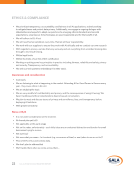
How does your organization currently/plan to address
ethical AI considerations?
Some form of training and/or security compliance
• A training has been provided regarding proprietary data sharing, and gender bias
• Conduct in accordance with the provisions of the law
• Data Security Company
• Full transparency on tools used and compliance with client’s security needs
• In accordance with current EU data protection laws, reviewing contractual clauses, in accordance
with information security quality standards and with the application of security techniques and
technologies, always with transparency with clients.
• Privacy policies and internal regulations to determine the usability criteria of AI outputs. Moreover,
professionals who deal with AI tools and outputs are specifically trained to perform the tasks.
• Slow and steady with a focus on NEED-based approval for a specific AI use case.
• Specific AI Ethic guidelines already published, influences AI Ethics on broader scale (national,
international)
• The way we use AI does not generate ethical issues.
• We are an ISO 27001 certified company and the risks, either related to compliance, ethics and/or
operations, are contemplated as part of our security management policies.
• We are cautious about AT use and only use it when we are 100% sure we can do so.
• We are in the process of putting together a policy for responsible use of AI. This is to be used by staff
on their day to day work as well as implementation teams that engage with technology partners.
• We are very aware of ethical considerations and are involved in many initiatives, including SAFE-AI
Tak Force, to learn more, help drive the conversation and come up with solutions.
• We have a written policy regarding the ethical use of AI
• We launched Safe -AI Taskforce to establish best practices for adopting AI in interpreting.
Ethics &Compliance
Smaller organizations are more likely than other types of orgs to use a public free service. Clients are
most likely to use a home-bred AI followed by an enterprise service, whereas 100% of LSP respondents
selected they use a public paid service in combination with the other answer options in question #33.
Europeans are less likely than other regions to have specific guidelines addressing the ethical use
of AI, whereas Americans are more likely. South American organizations have a greater chance of
having someone responsible for overseeing ethical guidelines. South America-based organizations
proportionally utilize more enterprise level services (more secure), whereas those in Asia are more apt to
utilize public services.